
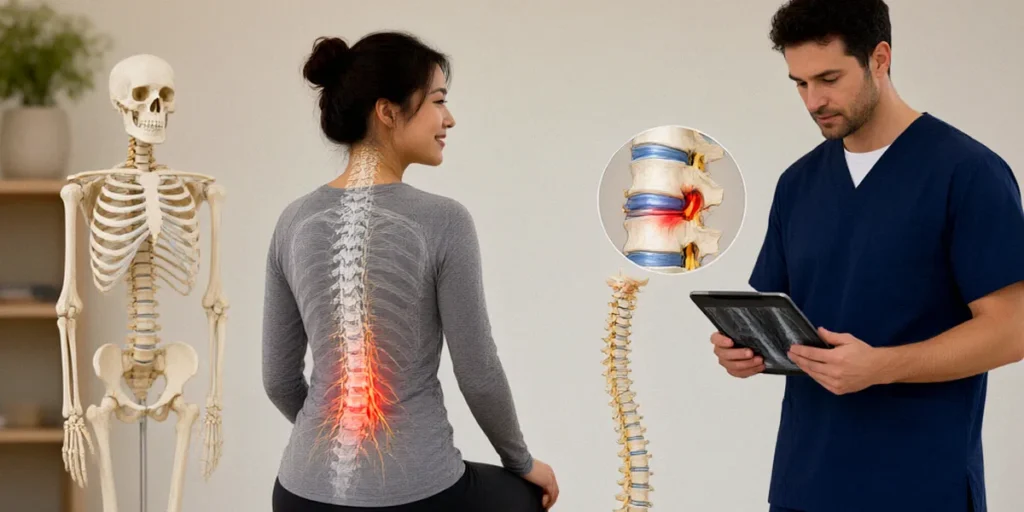
Spinal Stenosis Basics: What Every Canadian Should Know
Hearing the words “you have spinal stenosis” can feel like the ground shifting beneath you. Maybe you went in expecting a pulled muscle, and instead your physician is pointing at an MRI and talking about your spinal canal, facet joints, and nerves. We hear this story constantly from patients across Canada, and our team’s goal here is simple: break down the basics of spinal stenosis into plain language, so you can move forward with confidence instead of confusion. Whether you’re in Toronto, Halifax, or a small town in the Prairies, understanding this condition is the first step toward managing it well.
What Is Spinal Stenosis?
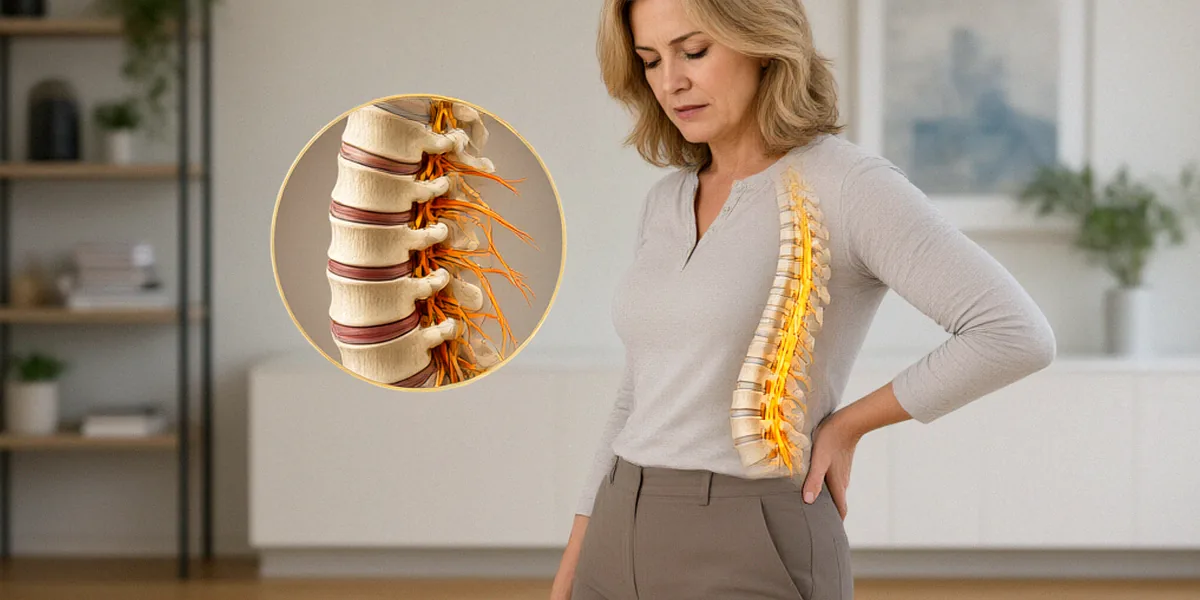
Spinal stenosis is the narrowing of the spinal canal — the bony tunnel that protects your spinal cord and nerve roots. When that space shrinks, nerves get compressed, and that pressure produces the aching, tingling, or heavy-legged feeling that sends so many Canadians to their doctor’s office. According to the Canadian Institute for Health Information, back pain is one of the most common reasons for visiting a physician in Canada, and stenosis sits high on the list of underlying causes. It affects approximately 1 in 10 Canadian adults over the age of 50, and it becomes more common with each passing decade.
The Anatomy of the Spine and Facet Joints
Your spine is made up of stacked vertebrae, and between each pair sit two small joints called facet joints. These joints guide movement and keep your spine stable, but they’re also vulnerable to wear. Facet joint arthritis is a leading cause of lumbar spinal stenosis in Canada — as these joints degenerate, they enlarge and develop bone spurs that encroach on the spinal canal. The discs between vertebrae can also bulge inward, and ligaments can thicken over time. The result is a canal that was once roomy enough for your nerves, now noticeably tighter.
Types of Spinal Stenosis: Cervical vs. Lumbar
Spinal stenosis shows up in two main locations, and the symptoms differ depending on where the narrowing occurs:
- Cervical stenosis — narrowing in the neck. It can cause neck pain, numbness in the arms and hands, balance problems, and in serious cases, bowel or bladder changes.
- Lumbar stenosis — narrowing in the lower back. This is by far the most common type, producing pain, cramping, and weakness in the legs and buttocks during walking or standing.
Some patients have narrowing in both regions, which is why a thorough orthopaedic assessment matters.
Common Causes and Risk Factors
Age is the biggest single risk factor, but it isn’t the only one. Osteoarthritis, herniated discs, and thickened ligaments all contribute. We also remind our Canadian readers that our long winters play a role: cold weather reduces outdoor activity, and inactivity weakens the muscles that support the spine, which in turn makes back pain feel worse. It’s a frustrating cycle, and breaking it starts with understanding what’s driving your stenosis.
Age-Related Changes in Facet Joints
By age 50, most of us have some degree of facet joint degeneration, even if we don’t feel it. Cartilage wears down, the joint capsule thickens, and the body responds by forming bone spurs — its attempt to stabilize a joint that now moves abnormally. In the lumbar spine, this process narrows the canal and the nerve root exits. In the cervical spine, it can narrow the space where nerves travel to the arms. This slow, decades-long process is why stenosis rarely appears suddenly.
Other Conditions That Contribute to Stenosis
Beyond facet joint arthritis, several other conditions can narrow the spinal canal or compress nerves:
- Herniated or bulging discs that push backward into the canal
- Thickened ligamentum flavum, the ligament running along the back of the canal
- Spinal fractures or injuries that change the shape of the canal
- Congenital stenosis, where someone is born with a naturally narrow canal
- Rare conditions such as spinal tumours or cysts
Recognizing the Symptoms
Spinal stenosis symptoms can be sneaky. Many patients describe them as “my legs just won’t cooperate,” and because the pain often mimics other orthopaedic issues like hip arthritis or peripheral artery disease, diagnosis can take time. We always encourage Canadian readers to describe their symptoms carefully — when they start, what makes them better, what makes them worse — because those details are what point a clinician toward stenosis.
Pain That Worsens with Standing or Walking
The hallmark symptom of lumbar stenosis is neurogenic claudication: leg pain, heaviness, or cramping that builds while walking or standing, then eases when you sit or lean forward. Bending over a shopping cart at the grocery store is a classic giveaway — that forward flexion opens the canal slightly and takes pressure off the nerves. Numbness, tingling, and radiating pain into the buttocks or legs are also common. In cervical stenosis, symptoms tend to show up in the arms and hands instead.
When to Seek Help from a Canadian Specialist
See your family doctor if leg or arm symptoms are limiting your daily life, if you can no longer walk the distances you used to, or if you notice balance changes or dropping objects. Seek urgent care immediately if you experience sudden severe weakness, loss of bowel or bladder control, or numbness in the saddle area — these are red flags for cauda equina syndrome and require emergency assessment. Your family physician can refer you to an orthopaedic specialist or spine clinic if needed.
Diagnosis and Treatment Options
Diagnosis usually starts with a physical exam and a careful history, followed by imaging. MRI is the gold standard for showing nerve compression, while CT scans give excellent detail of bony changes. If you’re waiting for imaging or a specialist referral, you’re not alone — the Canadian Orthopaedic Association reports that wait times for orthopaedic surgery often exceed recommended benchmarks in several provinces. The good news is that many patients improve with non-surgical care, and surgery is reserved for cases where conservative treatment hasn’t worked.
Non-Surgical Approaches: Physio, Medications, Injections
Physiotherapy is the foundation of non-surgical care. Canadian physiotherapy clinics often use the Oswestry Disability Index to assess back pain related to spinal stenosis, tracking how much the condition affects daily activities and measuring your progress over time. Other conservative options include:
- Anti-inflammatory medications and pain relievers, guided by your physician
- Epidural steroid injections to reduce inflammation around compressed nerves
- Targeted stretching and core strengthening exercises
- Activity modification and weight management
- Walking aids or a supportive brace in some cases
Surgical Interventions and Implants: What to Expect
When symptoms are severe and conservative care hasn’t helped, surgery may be recommended. The most common procedure is a laminectomy, which removes bone and thickened tissue to decompress the nerves. If the spine is unstable, a surgeon may perform a spinal fusion using spinal implants — rods, screws, cages, and bone grafts that stabilize the spine while it heals. Advances in implant design and minimally invasive techniques have shortened recovery times significantly, but surgery is still a serious step. Your surgeon will discuss whether decompression alone or decompression with fusion is right for your situation.
Living with Spinal Stenosis in Canada
Day-to-day life with stenosis takes some adjustment, but small changes add up. Staying active within your limits, maintaining a healthy weight, and protecting your spine during daily tasks can meaningfully reduce how often symptoms flare.
Home Remedies and Lifestyle Adjustments
Practical tips from our team and from patients we’ve worked with:
- Try low-impact exercise like swimming, cycling, or walking on flat, even surfaces
- Set up your workspace with a chair that supports your lower back and a screen at eye level
- Use a firm mattress and a pillow that keeps your neck neutral
- Apply heat to relax tight muscles and cold to calm acute inflammation
- Break long tasks into shorter chunks to avoid prolonged standing
Finding Community and Support in Canada
You don’t have to manage this alone. The Canadian Orthopaedic Association, the Arthritis Society Canada, and provincial physiotherapy associations offer educational resources and, in some cases, support networks. Many community health centres run chronic pain programs, and local seniors’ centres often host gentle exercise classes designed for people with back and joint conditions. Connecting with others who understand the daily reality of stenosis can be genuinely encouraging.
FAQ
Is spinal stenosis reversible?
The structural narrowing itself is not reversible without surgery, but symptoms often improve significantly with physiotherapy, medication, injections, and lifestyle changes. Many Canadians manage their symptoms well for years without surgery.
Can I exercise with spinal stenosis?
Yes — in fact, staying active is one of the best things you can do. Low-impact activities like swimming, water aerobics, and stationary cycling are usually well tolerated. Avoid activities that involve prolonged standing or heavy spinal loading, and check with your physiotherapist before starting a new routine.
How long is the wait for spinal surgery in Canada?
Wait times vary widely by province and by surgeon. The Canadian Orthopaedic Association notes that waits often exceed recommended benchmarks in several provinces. Your family doctor or surgeon’s office can give you a realistic estimate based on your region and urgency.
What’s the difference between spinal stenosis and a herniated disc?
A herniated disc is a single disc that bulges or ruptures and presses on a nerve. Spinal stenosis is a broader narrowing of the spinal canal, often from facet joint arthritis, thickened ligaments, and multiple age-related changes occurring together. The two can occur at the same time.
When should I consider surgery for spinal stenosis?
Surgery is usually considered when pain and weakness significantly limit your daily life, conservative treatments haven’t provided enough relief after several months, or if you develop serious neurological symptoms. A spine surgeon can help you weigh the risks and benefits for your specific case.
Spinal stenosis can feel overwhelming, but it’s a manageable condition — and Canadians have access to effective orthopaedic care through our public healthcare system. If you’re experiencing symptoms that sound like what we’ve described, speak with your healthcare provider. A prompt assessment, an accurate diagnosis, and a personalized treatment plan are the best tools you have for protecting your spine health long-term.