

Health Canada Medical Device Licensing: What It Means for Your Orthopaedic Care
You’re sitting in a surgeon’s office in Toronto or Vancouver, staring at a brochure for a spinal implant or a knee replacement system. The surgeon mentions it’s “approved” and widely used. But approved by whom? If that device was cleared by the U.S. Food and Drug Administration but never reviewed by Health Canada, it cannot legally be sold or implanted here outside specific exceptions. That single question — is this device actually licensed in Canada? — matters more than most patients realize, and it sits at the centre of everything we write about orthopaedics, spine health, and the implants used to treat back pain.
Why Health Canada Licensing Matters for Orthopaedic Patients
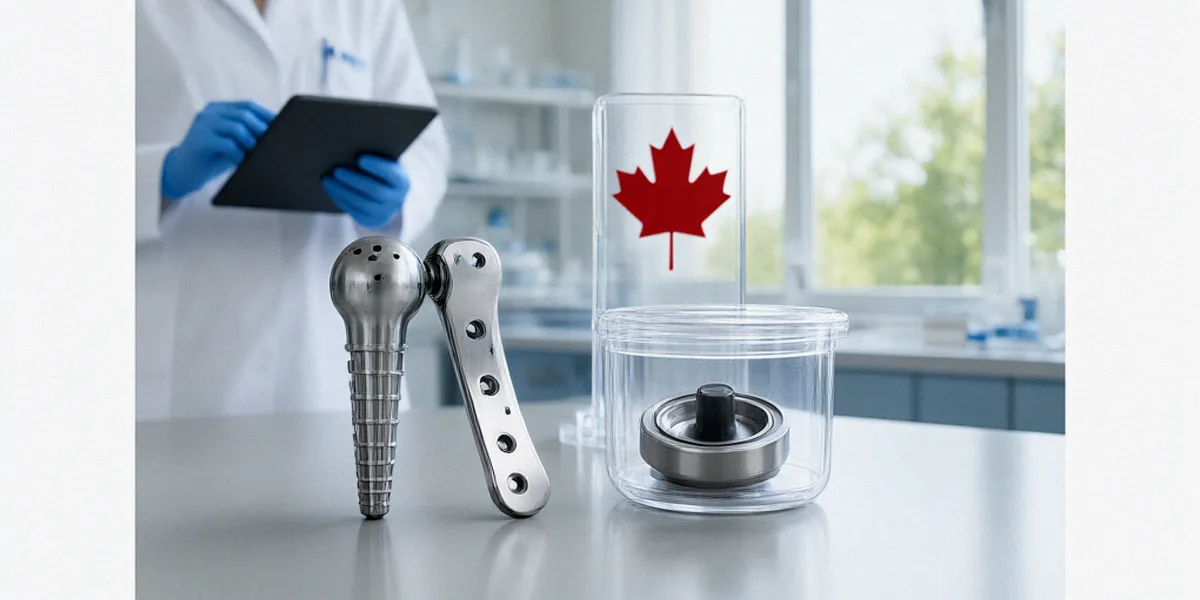
Health Canada’s Medical Devices Directorate regulates device licensing under the Medical Devices Regulations. That means every orthopaedic implant, spine hardware system, facet joint device, and surgical instrument sold in this country must hold a valid Medical Device Licence (MDL) — or qualify for a narrow exemption. A device being legally marketed in the United States, Europe, or Australia does not automatically mean it is licensed here. Canada runs its own review, its own labelling rules, and its own post-market requirements.
This matters because orthopaedic care in Canada relies heavily on implanted hardware: hip and knee replacements, spinal fusion cages, pedicle screws, artificial discs, and facet joint fixation devices. Each one enters the Canadian market through a regulatory pathway that patients rarely see but always depend on.
The Difference Between FDA Clearance and Health Canada Licensing
The FDA’s 510(k) pathway allows many devices to reach the U.S. market by demonstrating “substantial equivalence” to a previously cleared device — sometimes without new clinical trials. Health Canada has a comparable but separate process, and it does not accept an FDA clearance as a substitute for its own licence. A device can be FDA-cleared for years and still be unlicensed in Canada. We’ve seen Canadian patients assume otherwise, and it’s an easy — and understandable — mistake.
What ‘Licensed’ Actually Means for Your Surgery
When a device holds a Health Canada licence, it means the manufacturer submitted evidence of safety, effectiveness, and quality, and Health Canada reviewed it against the applicable class requirements. It also means the manufacturer committed to ongoing obligations: reporting adverse events, tracking recalls, and maintaining a compliant quality system. Licensing isn’t a one-time stamp — it’s an ongoing relationship between the manufacturer and the regulator.
How Health Canada Classifies Medical Devices
Health Canada sorts devices into four risk classes, from I (lowest) to IV (highest). The class determines how much evidence the manufacturer must submit and how long the review takes.
Class I and II: Lower-Risk Devices
Class I devices include things like tongue depressors, manual surgical instruments, and non-invasive supports. Class II covers slightly higher-risk items such as some diagnostic tools and certain surgical instruments. Many Class I devices don’t require a licence at all — only a establishment licence for the manufacturer — while Class II devices need a licence but face a lighter review.
Class III and IV: Implants and High-Risk Spine Devices
Most orthopaedic implants and spinal devices are Class III or IV, requiring the most stringent review. Class III typically covers devices that are implanted in the body for more than 30 days or that pose significant risk if they fail. Class IV covers the highest-risk devices, including those that support or sustain life. A spinal fusion cage, a total knee replacement, or a facet joint implant generally falls into this territory, meaning the manufacturer must submit clinical evidence, not just bench testing.
Why Facet Joint and Spinal Implants Usually Land in Class III or IV
Facet joint devices and spinal implants sit close to the spinal cord and nerve roots. Failure can mean revision surgery, neurological injury, or chronic pain. Health Canada’s classification rules reflect that risk: long-term implantable spine hardware typically requires the deepest level of scrutiny. Manufacturers must also demonstrate compliance with recognized quality standards such as ISO 13485 and, increasingly, the Medical Device Single Audit Program (MDSAP), which allows a single audit to satisfy multiple regulators, including Health Canada.
The Licensing Pathway: From Application to Approval
Getting a device licensed in Canada is not a quick administrative step. It’s a structured process with documentation, audits, and ongoing obligations.
What Manufacturers Must Submit
For a Class III or IV device, the manufacturer typically provides:
- A completed Medical Device Licence application with device description and intended use
- A valid Quality Management System certificate, often under ISO 13485 or MDSAP
- Labelling materials in both English and French, as required by Canadian law
- Clinical evidence, including trial data or literature supporting safety and effectiveness
- Risk analysis and post-market surveillance plans
How Long Health Canada Review Typically Takes
Review timelines vary widely. Class II applications may be processed in a matter of weeks to a few months. Class III and IV reviews can take many months, and complex spine or orthopaedic devices sometimes stretch into years — especially if Health Canada requests additional information. The COVID-19 pandemic added backlogs that regulators have been working through since. When we evaluate a device, we note how recently it was licensed, because a very new licence sometimes means limited real-world Canadian data.
Post-Market Surveillance and Recall Reporting
Licensing doesn’t end at approval. Manufacturers must report adverse events, serious incidents, and recalls to Health Canada. They must also maintain records and update labelling when new safety information emerges. If a device is recalled, Health Canada publishes the recall and the manufacturer must notify affected parties. This is one reason we encourage patients to ask about a device’s recall history — not to create fear, but to make sure the full picture is visible.
What This Means for Back Pain and Spine Health Treatments
Regulatory language can feel abstract until it touches your treatment. Here’s how licensing connects to the care Canadians actually receive for back pain and spine conditions.
Facet Joint Treatments and Licensed Devices
Facet joint injections, radiofrequency ablation, and facet joint fixation devices are all used in Canada. The medications and devices involved follow different regulatory paths. Injectables are regulated as drugs or biologics, while implantable facet joint devices fall under the medical device framework. Some facet joint technologies are licensed in Canada; others are used off-label, meaning a licensed device is being applied in a way not specifically approved. Off-label use isn’t automatically unsafe, but it should be discussed openly.
Spinal Implants: What Canadian Patients Should Ask
Spinal fusion hardware, artificial discs, and motion-preservation devices each carry a licence number if they’re legally marketed here. We recommend patients ask for that number and check it against Health Canada’s Medical Devices Active Licence Listing (MDALL) — a public database anyone can search. If a device isn’t listed, that’s a conversation worth having before surgery.
The Special Access Program Explained
Sometimes a patient needs a device that isn’t licensed in Canada. The Special Access Program allows access to unlicensed devices in certain urgent cases, where conventional therapies have failed or aren’t available. It’s not a loophole — it requires a physician’s application and Health Canada’s authorization. We mention it because patients occasionally hear about a device used in another country and wonder why it isn’t available here. Sometimes the answer is the Special Access Program; often it’s simply that the manufacturer hasn’t applied for a Canadian licence.
How We Evaluate Devices for Our Canadian Readers
We’re not regulators, and we don’t pretend to be. But we do apply a consistent editorial process when we write about orthopaedic and spine devices.
Our Checklist for Reviewing Orthopaedic Implants
- Confirm the device appears in Health Canada’s MDALL with a current licence
- Check for MDSAP or ISO 13485 certification from the manufacturer
- Cross-reference claims against peer-reviewed orthopaedic literature
- Note the licence date and whether Canadian-specific data exists
- Flag any active recalls or safety communications
Red Flags We Watch For
We’re cautious when a device is heavily marketed but has thin peer-reviewed evidence, when Canadian licensing is vague or unverifiable, or when a manufacturer can’t clearly explain its post-market surveillance. We also flag devices with limited Canadian data — sometimes a device is licensed here but most of its clinical evidence comes from other health systems with different patient populations and surgical practices.
Questions to Ask Your Surgeon About Device Licensing
You don’t need to become a regulatory expert. You need a few direct questions.
Before Surgery: What to Confirm
- Is this device licensed by Health Canada?
- What is its Medical Device Licence number?
- Is it part of a clinical trial or used off-label?
- What does the post-market safety record look like?
- What are the alternatives if I’d prefer a different device?
If a Device Is Not Licensed in Canada
Ask why. Sometimes the answer is that the manufacturer hasn’t pursued Canadian licensing, sometimes it’s that the device is available only through the Special Access Program, and sometimes it’s that the surgeon is participating in a trial. Any of these can be legitimate — but you deserve to know which one applies to you.
FAQ
Is a device approved by the FDA automatically available in Canada?
No. Health Canada requires its own licence under the Medical Devices Regulations. An FDA clearance does not transfer to Canada, and a device can be legally sold in the U.S. while remaining unlicensed here.
How can I check if my spinal implant is licensed in Canada?
Search Health Canada’s Medical Devices Active Licence Listing (MDALL). You can look up devices by name, manufacturer, or licence number. If it isn’t listed, ask your surgeon for clarification.
What are MDSAP and ISO 13485?
They’re quality management certifications. ISO 13485 sets the standard for medical device quality systems, and MDSAP lets a single audit satisfy multiple regulators, including Health Canada. Most Class III and IV manufacturers hold one or both.
What is the Special Access Program?
It’s a Health Canada pathway that allows physicians to request unlicensed devices for patients in urgent or exceptional circumstances, when licensed alternatives have failed or aren’t available.
Does a Health Canada licence guarantee a device works well for me?
No. Licensing confirms the device met regulatory standards for safety, effectiveness, and quality. It doesn’t predict your individual outcome, which depends on your anatomy, diagnosis, surgeon, and rehabilitation.
Understanding Health Canada licensing gives Canadian patients real leverage in orthopaedic and spine care decisions. Whether you’re researching facet joint treatments, evaluating spinal fusion hardware, or simply trying to decode a brochure, knowing how devices reach the Canadian market — and how to verify them — turns a confusing process into an informed one. Our team is here to help translate the regulatory language so you can ask better questions and make decisions grounded in evidence.